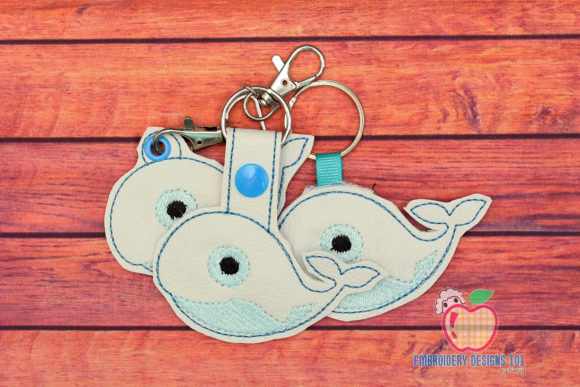
Swimming Blue Whale: A Practical Keyfob Design Review
When a new embroidery design file lands in my library, my first question isn't about its beauty, but about its utility. How will this design perform in the real world of hoops, stabilizers, and client requests? Today, I'm putting the Swimming Blue Whale in the Hoop Keyfob under that practical lens.
The First Impression: Calm, Clean, and Ready for Action
This marine mammal design immediately strikes a mood of serene movement. The whale’s curved form suggests a gentle glide, not a chaotic splash, making it feel approachable and friendly. The layout is clean, with a level of detail that promises good stitch definition without appearing overly dense or fussy. It has a visual personality that leans toward modern, thoughtful gift-giving rather than cartoonish whimsy. In my mind, it naturally belongs on items meant for someone who appreciates quiet beauty—a baby’s blanket corner, a linen kitchen towel for a beach house, or a canvas tote bag for a thoughtful customer.
Where This Whale Shines in Real Projects
The fact that this is an in-the-hoop keyfob design, with three versions included, is its greatest practical strength. Let’s walk through some real-life embroidery situations.
For custom apparel, like a relaxed-fit sweatshirt, the whale’s size and shape would translate beautifully as a standalone chest design. Its flowing lines would complement the garment’s drape. On a sturdy tote bag, it becomes a statement of personal style, elevating a simple bag into a boutique product. For baby clothes or nursery decor items, the theme is inherently gentle and appealing, perfect for personalized gifts. I envision it stitched onto a organic cotton blanket or the pocket of a baby romper.
As a finished keyfob itself, it’s ready for craft fair tables or Etsy listings. The provided versions—Snap Tab, Eyelet, and Ribbon—give you flexibility to match different hardware styles, which is a smart touch for a small shop owner aiming for product consistency. This adaptability also makes it a reliable digital embroidery file for commercial projects; you could offer it as a customization option for a marine-themed event or corporate gift without worrying about complex assembly.
A Specific Scenario: Crafting a Boutique Beach Tote
Imagine preparing a custom embroidered tote for a client’s beach wedding gift. You’re thinking about stitching clarity, product value, and how the recipient will react. The swimming blue whale, placed subtly near the bag’s seam, would offer recognition without overwhelming the piece. The clean stitching would convey professionalism and care, directly impacting customer trust in your handmade presentation. The design’s inherent giftability is high—it feels special, not generic.
Considerations for Careful Application
While the design is described as 4×4 hoop friendly, which is excellent for most home machines, its application needs thought. On very small items, like a cap’s curved surface, the whale’s tail and body curves require careful stabilization to prevent distortion on the stretchy fabric. On thin fabric, like a lightweight tee, the stitch density (which you should test first) must be balanced to avoid puckering.
Dark fabric presents a classic challenge: thread color contrast. A blue whale on a navy background might lose its definition. Always test on scrap fabric first, and consider using a slightly brighter top thread shade to maintain visual appeal. For products destined for frequent washing, like aprons or pillow covers, the integrity of the smaller details in the design will depend heavily on using proper stabilizer and high-quality thread.
How This Design Affects Your Craft Business
For an Etsy seller or creative entrepreneur, this design is a solid craft business asset. Its clear, pleasant imagery engages buyers easily in printable mockups for your listings. It supports brand consistency if your shop leans toward nature or calm themes. When stitched well, it adds perceived value to a simple keyfob or apparel piece, turning a quick project into a premium handmade product. For apparel decorators, it’s a versatile addition to your library that can serve both personal and commercial embroidery projects, provided you confirm the licensing terms for each use.
Practical Designer Notes Before You Hoop
My routine with any new design like this is methodical. I always advise:
- Test the design on scrap fabric first, using both a light and dark background if possible.
- Review the stitch density by observing the file preview; look for areas that might be too dense and cause fabric pull.
- Check thread color contrast. Plan your palette to enhance the whale’s form.
- Inspect the small details in the provided versions to ensure your machine handles the satin stitches or fill stitches cleanly.
- Confirm the exact hoop size requirement for your machine, even though it’s noted as 4×4 friendly.
- Use the appropriate stabilizer for your target fabric—no shortcut here.
- Finally, check whether the design license covers selling the finished product, selling the digital file, or both. Never assume.
Final Judgment: A Reliable, Mood-Driven Asset
The Swimming Blue Whale in the Hoop Keyfob emerges from this practical review as a reliable, mood-driven design. It isn’t a flashy trend piece, but a stable, visually calming asset for your embroidery project roster. It fits seamlessly into real-world applications like personalized gifts and small shop merchandise. Its success hinges entirely on your foundational embroidery skills: proper stabilization, thoughtful color choice, and a test run. Stitch it with care, and it will deliver a finished product that feels both professional and genuinely charming, a quiet blue whale ready to swim onto someone’s favorite item.